If you could only own two cordless tools, it'd be a drill and an impact driver. The impact driver changed how we work — driving 3" deck screws without wrist fatigue, sinking lag bolts that used to require a ratchet, and doing it all one-handed. But not all impact drivers are created equal.
We evaluated every major cordless impact driver on Amazon with 4.5+ stars and 1,000+ reviews, then ranked them by return rate data and real-world price-to-performance. Here are the ones worth your money.
1. Milwaukee 2953-22 M18 FUEL 1/4" Hex Impact Driver

Milwaukee 2953-22 M18 FUEL
Milwaukee's M18 FUEL impact driver is the benchmark for the category. 2,000 in-lbs of torque with 4-speed mode selection means you can drive delicate cabinet screws on mode 1 and sink 6" structural screws on mode 4. The MOST COMPACT impact driver in its class at just 4.59" in length. The hydraulic-hybrid impact mechanism is noticeably smoother and quieter than competitors.
✓ Pros
- Most compact in class (4.59" length)
- 4-speed selection for precision control
- Hydraulic impact mechanism — smoother, quieter
- 2,000 in-lbs of torque
✗ Cons
- Premium pricing
- Mode button can be accidentally pressed
- Overkill for light-duty homeowner use
2. DeWalt DCF850B 20V MAX XR 1/4" Impact Driver
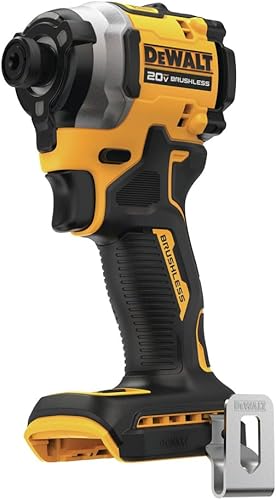
DeWalt DCF850B ATOMIC 20V MAX
DeWalt's answer to the FUEL is seriously impressive. 1,825 in-lbs of torque in a compact body with 3-speed settings and a precision drive mode that slows the driver as the screw approaches flush. The CNC-machined body feels premium, and the belt clip is the best in the business. If you're already in the DeWalt ecosystem, this is a no-brainer.
✓ Pros
- Precision drive mode prevents over-driving
- Excellent belt clip design
- 3-speed + precision mode
- Slightly cheaper than Milwaukee
✗ Cons
- Slightly less torque than Milwaukee
- LED light placement could be better
- Bit holder retention is average
3. Makita XDT16Z 18V LXT Brushless Quick-Shift Impact Driver
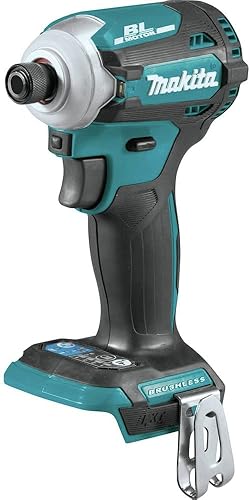
Makita XDT16Z 18V LXT
Makita's Quick-Shift Mode is genuinely innovative — it automatically reduces rotation speed during tightening to prevent screw cam-out and material damage. This is the impact driver for people who care about the quality of their work, not just speed. The 4-speed selection and assist mode (A-mode) make it the most controllable impact driver we've tested.
✓ Pros
- Quick-Shift Mode prevents cam-out
- 4-speed + Assist mode
- Quietest impact driver tested
- Exceptional build quality
✗ Cons
- Lower peak torque (1,600 in-lbs)
- Mode selection interface takes learning
- Less retail availability
4. DeWalt DCF887D1 20V MAX XR 1/4" Impact Driver Kit

DeWalt DCF887D1 20V MAX XR
With 18,000+ reviews at 4.8 stars, the DCF887 is one of the most proven impact drivers ever made. It's the previous generation XR, but that means it's been refined over years of real-world use. 1,825 in-lbs of torque, 3-speed settings, and a complete kit for under $150. The sheer volume of positive reviews and low return rate make this a safe bet.
✓ Pros
- 18,000+ reviews — massively proven
- Complete kit under $150
- 3-speed selection
- Extremely low return rate
✗ Cons
- Previous generation (no precision drive)
- Slightly larger than newer models
- Single battery kit
5. Ryobi PBLID02K ONE+ HP Brushless Impact Driver

Ryobi PBLID02K ONE+ HP
Ryobi's HP brushless impact driver delivers 1,800 in-lbs of torque — within striking distance of Milwaukee and DeWalt — for literally half the price. The 3-speed selection and tri-beam LED are features you'd expect at twice the cost. For homeowners and weekend warriors, this is the sweet spot of performance and value.
✓ Pros
- Half the price of pro brands
- 1,800 in-lbs — competitive torque
- 3-speed selection
- 300+ ONE+ tools share the battery
✗ Cons
- Build quality gap vs. pro brands
- Home Depot exclusive
- Not rated for all-day pro use
The Bottom Line
For pros who need the best: Milwaukee 2953-22 — the compact size and hydraulic mechanism are game-changers on the jobsite. For the best value in pro-grade: DeWalt DCF887D1 — 18,000+ reviews don't lie. For homeowners: Ryobi PBLID02K gives you 90% of the performance at 50% of the price. For precision work: Makita XDT16Z's Quick-Shift Mode is unmatched for preventing damage to fasteners and materials.
Check Price on Amazon →